The built environment is a major driver of greenhouse gas emissions. The construction phase uses large amounts of carbon-intensive materials, and buildings require energy for heating, cooling and general operation throughout their lifespans.
In Switzerland, numerous initiatives at the spatial and political scales have attempted to reduce these emissions. However, the building sector is far from being on track to meet its net-zero objectives for 2050. This has prompted SWICE researcher Sascha Nick to call for a fundamental rethinking in how we re-design, maintain, and inhabit our spaces. His research shows that reconfiguring housing and related mobility, while keeping high wellbeing standards, is entirely possible with existing skills and technology.
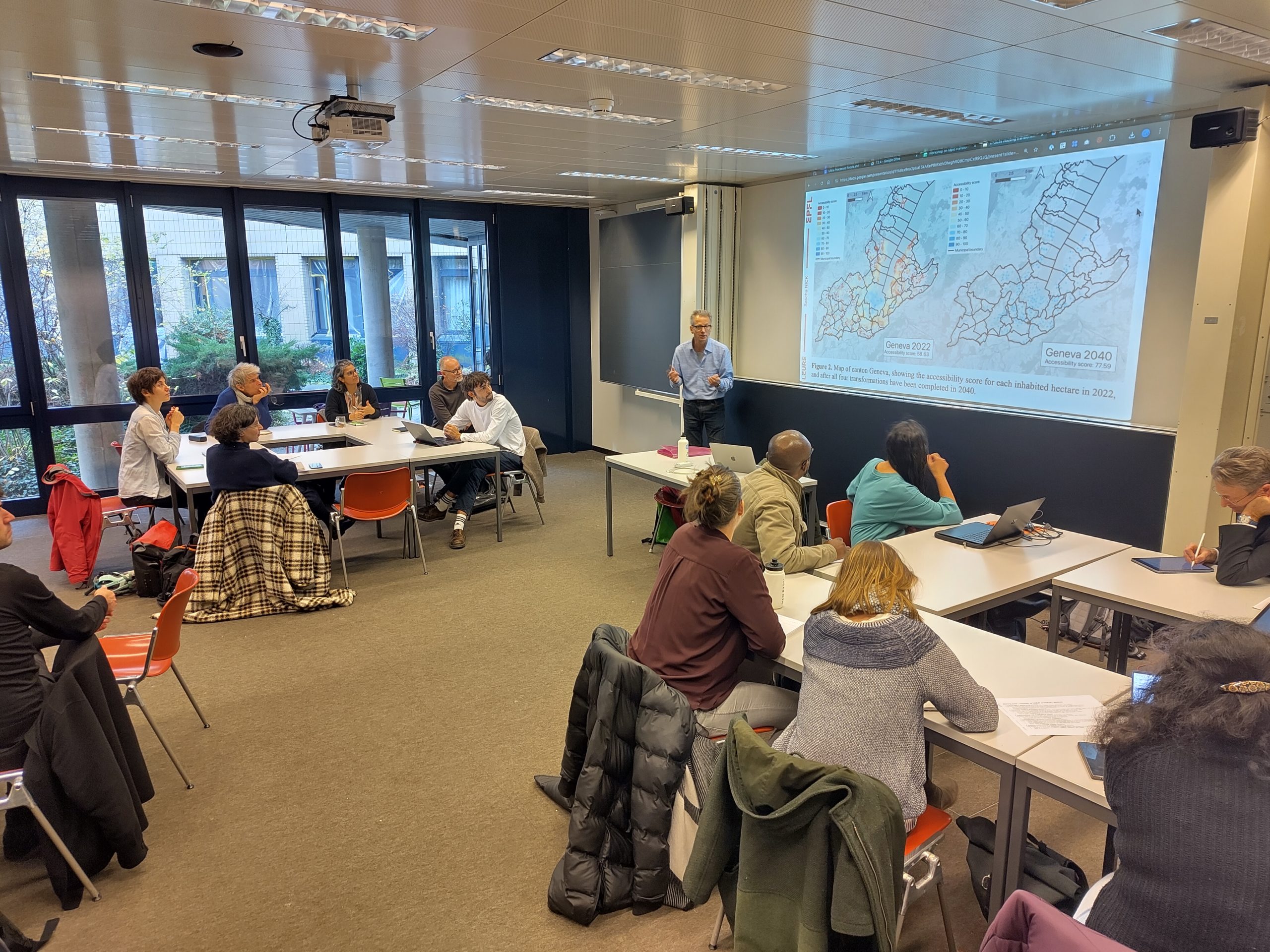
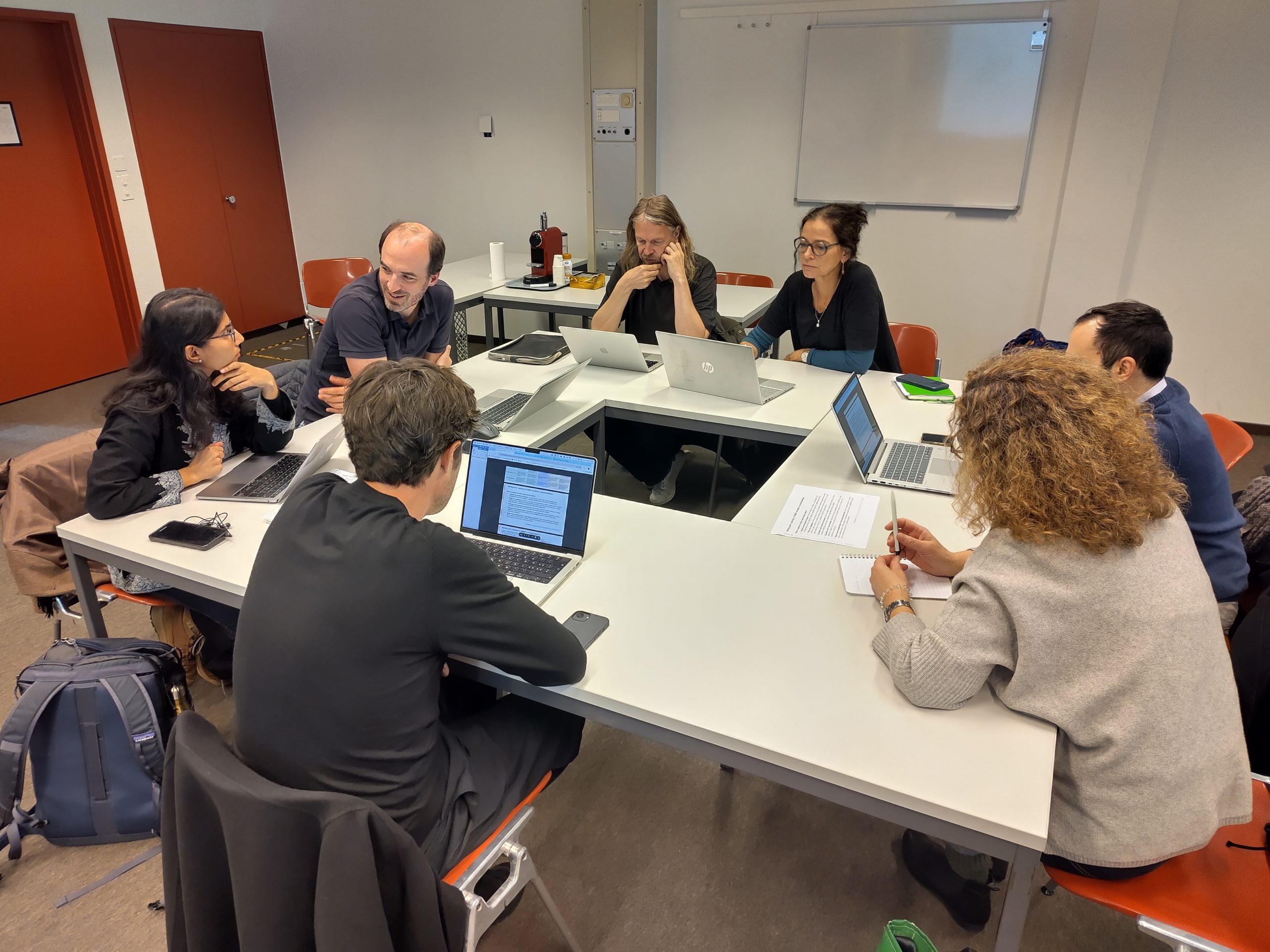
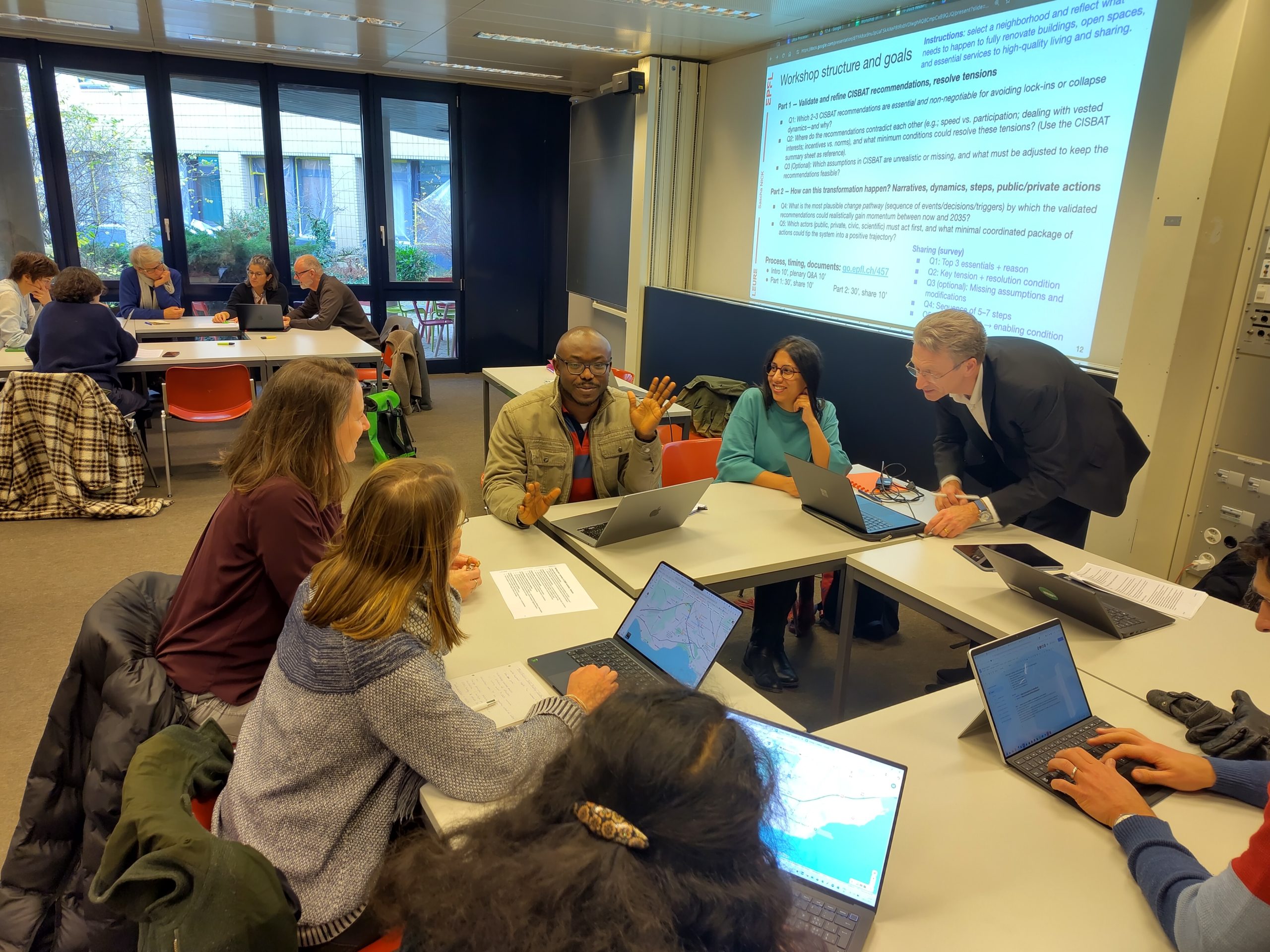
On the 19th of November 2025, Sascha and master student Tom Nesling organized the second of a series of workshops on the rapid transformation of Swiss housing. Their goal is to bring together academics, industry practitioners, the public sector and civil society to co-create a transformative plan for the Swiss built environment.
The workshop was well attended, with 28 participants representing a broad range of these areas of society. After two hours of excellent engagement, teamwork and discussion, a few key messages emerged:
Cultural and structural change must advance together. Participants agreed on the need for new narratives, education, and real-life examples, such as Living Labs, pilot neighborhoods, and prototypes that make alternative ways of living tangible.
Rapid change requires new democratic formats. There was strong agreement that speed and legitimacy must be reconciled. Participants called for municipal-level processes, citizens’ policy labs, and broader participation when pilots scale beyond neighborhoods.
Ownership, profit motives, vested interests, and market structures remain major barriers. Experiences shared in the groups showed how current governance, rental arrangements, and practices can block innovation.
No single actor can initiate the shift alone. Participants stressed that public authorities, private actors, and citizens must move in parallel.
The session built on insights from a previous session at CISBAT in September. Two more workshops are planned in the first half of 2026, in different parts of Switzerland.